Refrigeration is the rule
Cold-chain handling, shelf life, receiving, storage, and case type shape where a product can go and how reliably it can stay there.
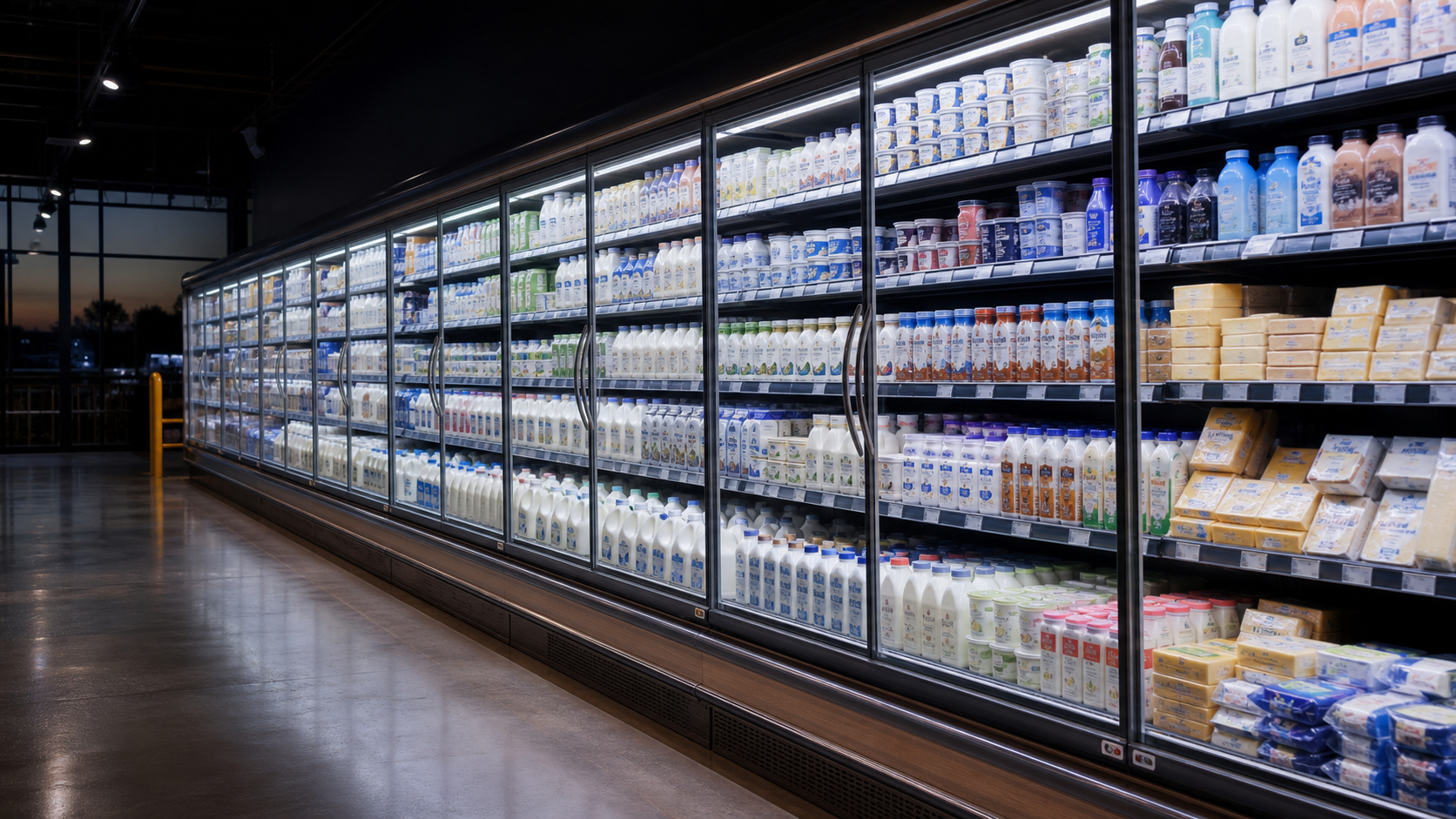
A field guide for refrigerated retail
DairyDepartments.com helps startup and emerging brands understand the formats, adjacencies, and operating realities of the supermarket dairy department.
The refrigerated set, before opening
Case map 01
The dairy department is a temperature-controlled retail environment with distinct product zones, pack conventions, replenishment needs, and shopping missions. A credible introduction starts with the set—not the pitch deck.
Cold-chain handling, shelf life, receiving, storage, and case type shape where a product can go and how reliably it can stay there.
Milk, cultured products, cheese, and butter anchor the department. New products need to fit the way shoppers and store teams already move through these staples.
Plant-based alternatives, functional formats, and grab-and-go products are often understood through their relationship to established dairy categories.
A clear pack format, dependable supply, realistic shelf life, and sales evidence from a comparable refrigerated environment make the review more useful.
Opportunity scan 02
These are product territories, not guarantees of placement. Each requires a close read of the retailer, the local set, and the needs of the category.
Milk, cultured products, butter, and related staples where sourcing, flavor, formulation, or pack size creates a relevant point of difference.
Non-dairy beverages, cultured products, creamers, and cheese alternatives designed to sit beside or near the categories they replace.
Higher-protein, lower-sugar, lactose-free, and other clearly formulated products that answer a specific shopper need without overclaiming.
Refrigerated products using protein, cultures, or other functional positioning as part of an everyday food or beverage format.
Cups, drinks, cheese snacks, and other portable packs built for individual use and a clearly defined refrigerated location.
Department anatomy 03
Every retailer arranges the department differently. This simple map helps a brand team ask better questions during a store walk.
Large-format staples, smaller bottles, cream, and sometimes refrigerated alternatives. Pay attention to door type, pack dimensions, price architecture, and private label.
Cups, tubs, multipacks, drinkables, and kids formats. Shelf life, pack-out, flavor count, and the role of promotion are especially visible here.
Blocks, shreds, slices, snacks, specialty formats, and butter. The boundary between core dairy, specialty cheese, and deli varies by store.
Eggs, dough, chilled snacks, and other nearby categories that may complete the shopper mission even when the retailer manages them separately.
Working sequence 04
A practical sequence for preparing a credible retail introduction.
Visit the target retailer. Record case type, shelf dimensions, pack formats, price tiers, category adjacencies, and where comparable products sit.
Pressure-test the item dimensions, case pack, label readability, shelf life, storage needs, and replenishment method against the real set.
Use results from a comparable refrigerated environment when available. Keep the evidence specific: units, stores, weeks, distribution, and conditions.
Lead with category fit, operational readiness, target placement, supply, and the shopper need. Let the brand story support that case.
Prepare for onboarding, delivery, merchandising, sampling or promotion, and measurement. A placement plan should explain how the product will enter and stay in the set.
Make it concrete
Share the product spec, intended case location, target retailers, cold-chain details, and any relevant sales evidence. The team can use that context to frame a practical next step.
Email the team